How Many Great Dane Colors Are There?
Great Danes are known for their impressive size, but their coat colors are equally remarkable. If you’ve ever wondered, “how many Great Dane colors are there”, the answer depends on whether you’re considering official breed standards or recognizing additional non-standard colors. In this guide, we’ll explore the official AKC-recognized Great Dane colors, explain common non-standard variations, and dive into the genetics behind these majestic coats.
How Many Great Dane Colors Are Recognized by the AKC?
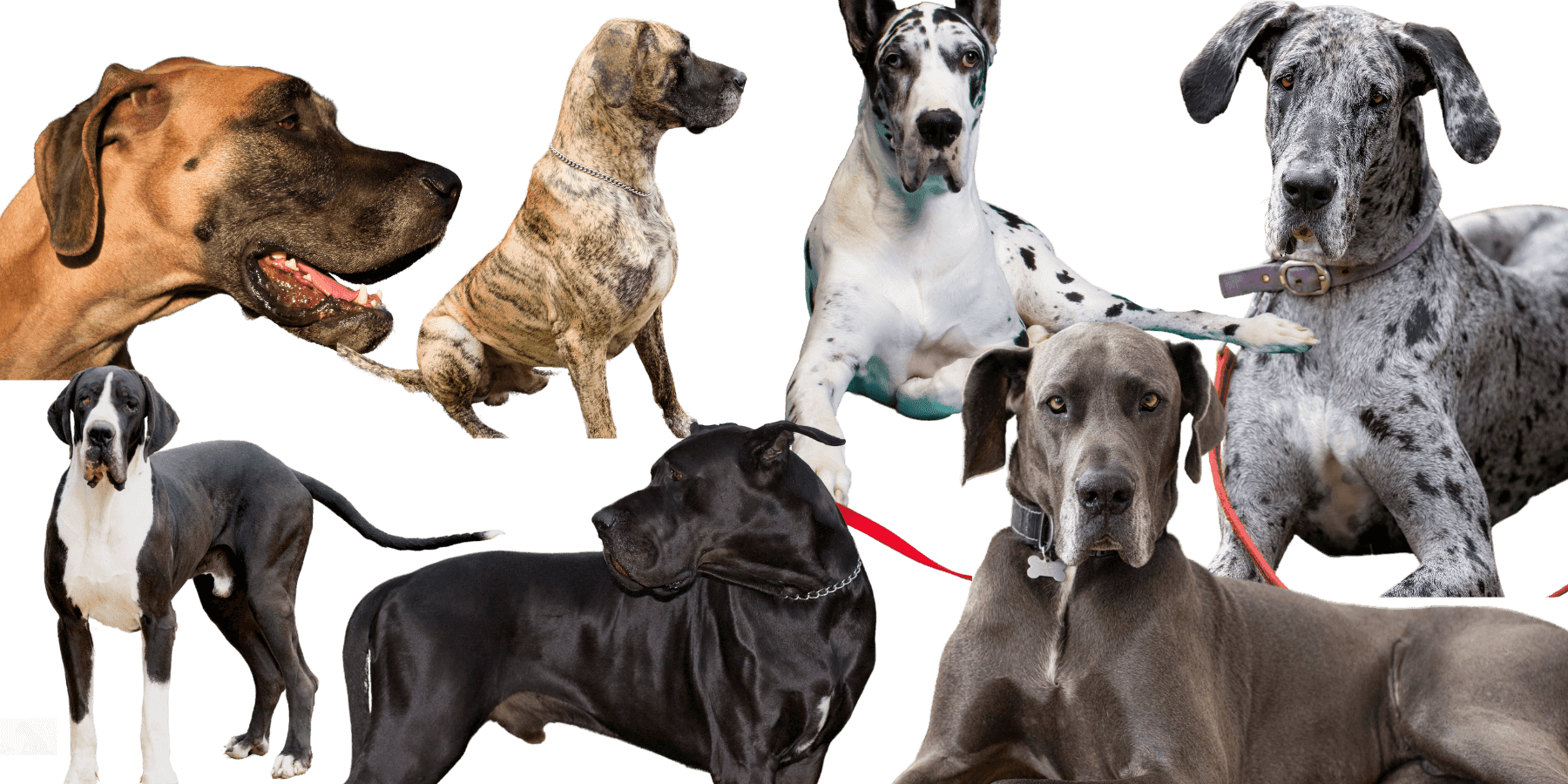
According to the American Kennel Club (AKC), there are seven officially recognized Great Dane colors that meet the breed standard for show eligibility. Each color has unique genetic markers and is bred following strict standards established by the Great Dane Club of America (GDCA).
The 7 AKC-Recognized Great Dane Colors:
- Fawn: A golden-yellow coat with a distinctive black mask.
- Brindle: A fawn-colored base coat with black stripes resembling tiger patterns.
- Blue: A solid, steel-blue coat that gives Great Danes a regal and elegant appearance.
- Black: A solid black coat with a glossy, sleek appearance.
- Harlequin: A white base coat with irregular black patches.
- Mantle: A black coat with specific white markings, resembling a tuxedo.
- Merle: A gray coat with black marbling or patches, officially recognized in 2018.
What About Non-Standard Colors?
While the AKC only recognizes seven Great Dane colors, additional coat colors can appear due to genetic combinations, though they are considered “non-standard” for show purposes. These colors are still beautiful and often sought after by pet owners.

Common Non-Standard Great Dane Colors:
- Chocolate (Brown): A rich brown coat that isn’t recognized by the AKC but can occur due to recessive genes.
- Fawnequin: Similar to harlequin, but with a fawn base and black patches.
- Lilac (Silver-Fawn): A diluted version of the fawn coat, creating a silvery-beige appearance.
- White: Pure white Great Danes are rare but can be born from merle or harlequin pairings. Caution: White Great Danes are more prone to hearing and vision problems.
- Double Merle: A result of breeding two merles together, creating a mostly white coat with patches of merle. Double merles often have significant health issues.
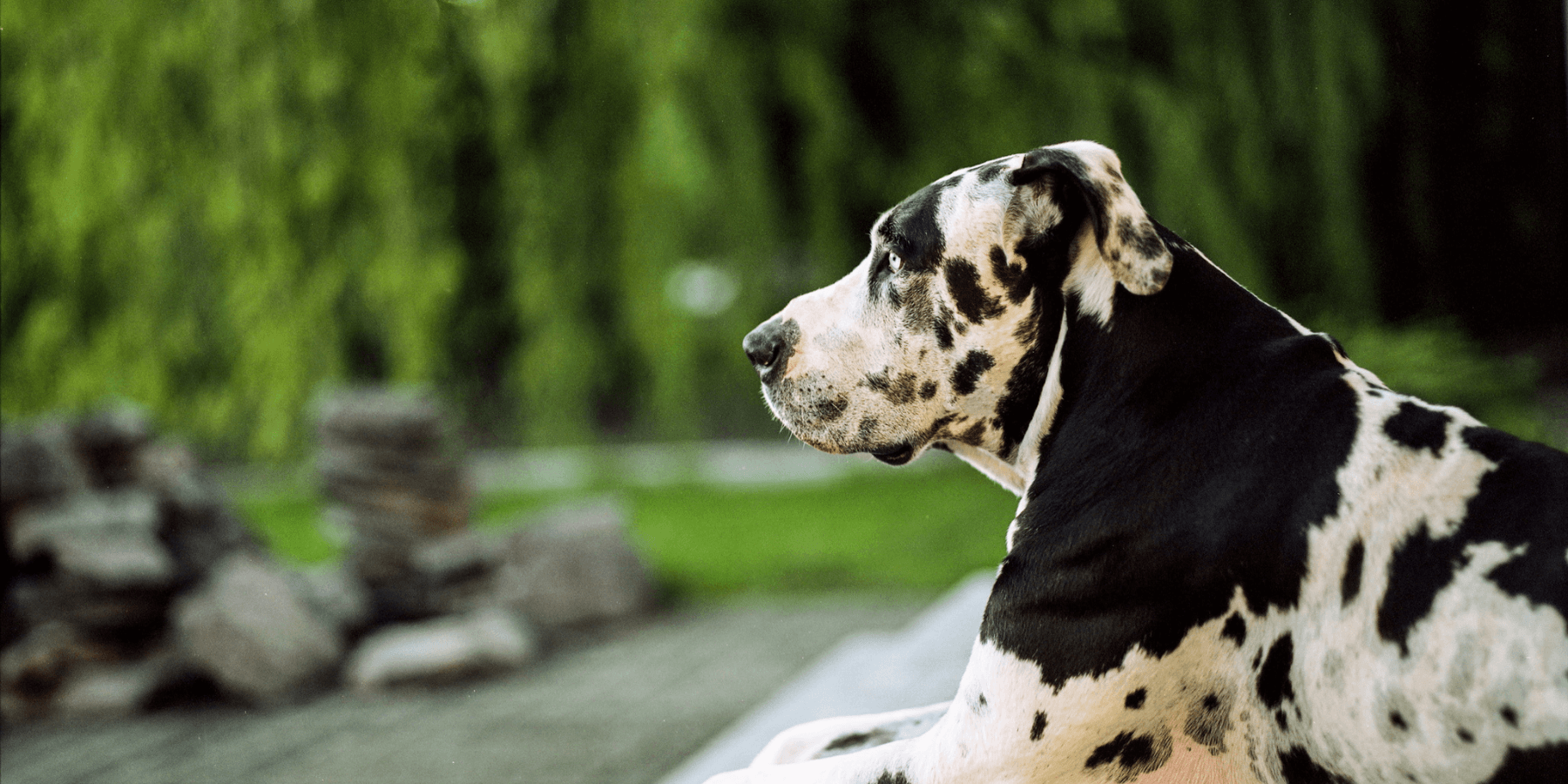 A Harlequin Great Dane
FAQs About Great Dane Colors
- Can Great Danes Be White? Yes, but all-white Great Danes are not recognized by the AKC and are prone to hearing and vision issues.
- What Is the Most Popular Great Dane Color? Fawn and harlequin are the most popular colors due to their iconic looks and historical popularity.
- Are Non-Standard Colors Unhealthy? Not always. Some non-standard colors like chocolate or lilac are healthy if bred responsibly. However, problematic colors like double merle can cause health concerns.
- Can a Great Dane Be Chocolate or Brown? Yes, chocolate Great Danes do exist but are not recognized by the AKC. This coat color comes from recessive genes found in specific breeding lines.
- Is There a “Rarest” Great Dane Color? Merlequin, lilac merle, and blue harlequin are considered rare due to the specific genetic combinations needed to produce them.
- Why Are Some Great Danes Born Completely White? White Great Danes often result from double merle breeding, which leads to potential health problems like blindness or deafness.
- What’s the Difference Between Merle and Harlequin? Merle Great Danes have a gray base with black patches, while harlequins have a white base with black patches.
- Can Great Danes Have Mixed Colors? Yes, mixed coat colors like mantle merles or fawnequins occur when different genes combine during breeding but are not AKC-recognized.
- Are Great Dane Puppies Born the Same Color as Adults? Not always. For example, blue Great Dane puppies may appear almost black at birth but lighten as they grow.
- Does Coat Color Affect Temperament?No, a Great Dane’s coat color has no influence on its personality or temperament. Choose based on health and personality rather than color.
A Fawn Great Dane

How Locus Genes Create Unique Great Dane Colors
The most important coat color genes for Great Danes include:
- B Locus: Determines black (BB/Bb) or chocolate (bb).
- D Locus: Controls dilution, such as blue or lilac.
- M Locus: Responsible for the merle pattern.
- H Locus: Modifies merle to harlequin if the dog inherits Hh.
Conclusion: How Many Great Dane Colors Are There?
So, “how many Great Dane colors are there?” The AKC recognizes seven standard colors, but due to genetic diversity, many more colors exist. Whether standard or non-standard, all Great Danes deserve love and care in a responsible home.