Senior Great Dane Care: How to Take Care of Your Aging Dog
Whether you have a house of multiple danes like me, or even just one, the senior Great Dane is often the calmest and most relaxed. But as they age, the needs of your Great Dane change and it's important to be aware of how to take care of your aging dog. With any aging dog comes health concerns so you want to do your best to keep your Great Dane healthy.

One day you bring home a new puppy at a lively young age and the next thing you know, your beloved pet has entered their senior years.
Puppy rearing is a joyous time that quickly passes, so it’s important to make the most of your Great Dane’s senior years. Dogs lives are much shorter than ours, and we must do everything in our power to make sure they are comfortable and have the best quality of life possible.

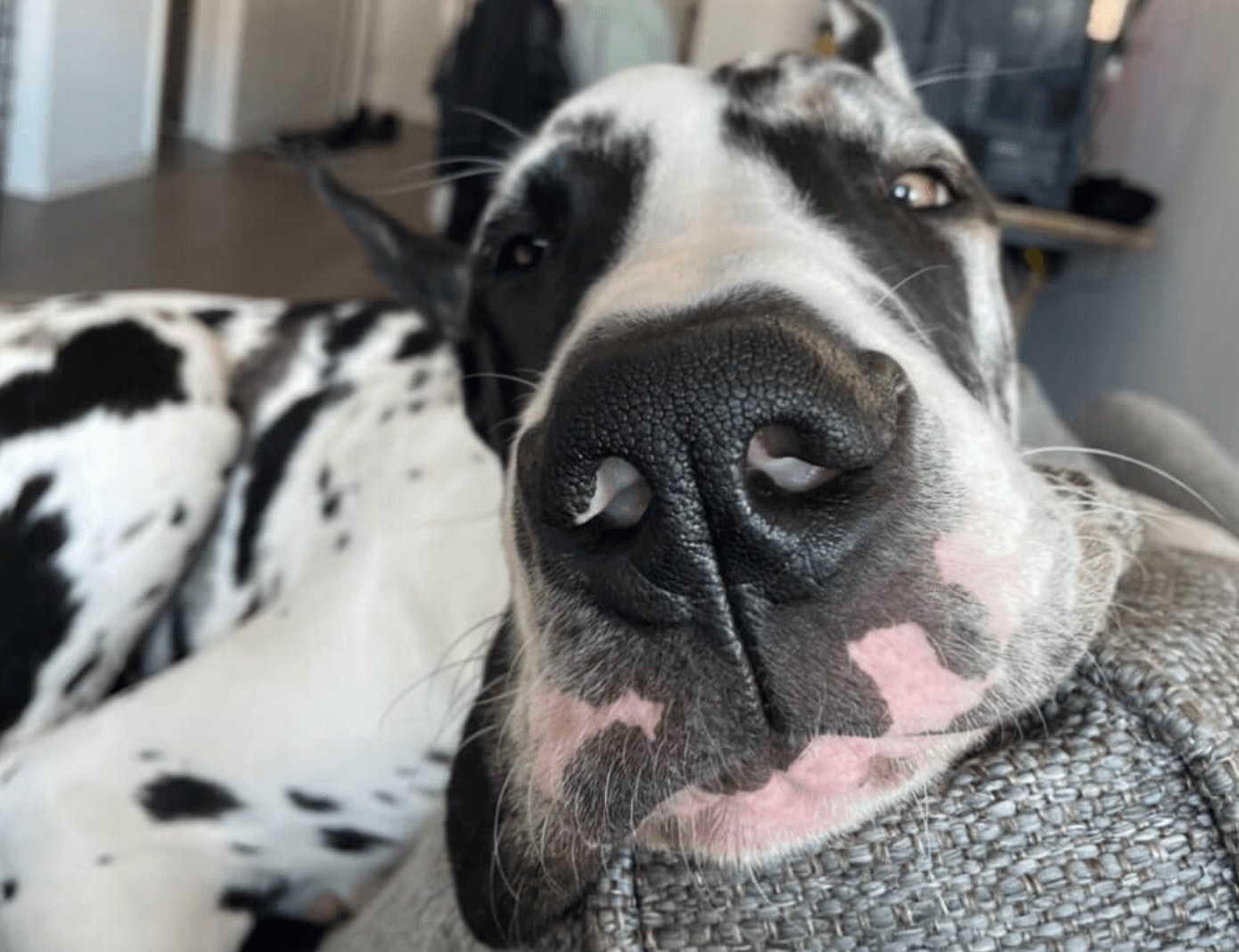
This is Maddox. Maddox will celebrate his 11th birthday on August 10th.
"he has been by our side since the day we brought him home in 2011. He prefers attention and cuddles over food and treats, but if you do want to get him excited, he will come running when he hears the whip cream can"
~Jenn IG @jennwakefield
We all know the short life span of a Dane. The average lifespan is typically around 7-10 years old. Giant breeds like Great Danes are considered seniors by the time they turn 5 years old. Sounds crazy to think "I have a 5-year-old senior dane" at such a young age, we a referring to our puppy as a senior dog.
As your Great Dane ages, he or she will require different levels of care. Senior Great Danes are particularly prone to health problems as they get older, so it's important to be prepared for the changes that will occur. In this blog post, we will discuss the various things you need to do in order to provide senior care for your Great Dane. We'll cover everything from diet and exercise to common health problems and how to deal with them.
Starting from the easiest and most manageable health conditions and ending with the not so easy:
Weight Gain
One of the most important things you can do for your senior Great Dane is to make sure he or she gets plenty of age-appropriate exercises. Just like humans, as Great Danes get older they tend to become less active. Once a puppy romping around the house, they are now a lazy senior dog napping on the couch all day. As their activity level decreases, so does their metabolism.
This can lead to several health problems, such as obesity, joint issues, and even depression. Too much weight can also put a strain on your dog's other organs, so it's important to keep them at a healthy weight.
If you're not sure how much exercise your senior Great Dane needs, please read our Great Dane blog on exercise HERE
To avoid these problems, it's important to keep your Great Dane active throughout his or her golden years. A daily walk is a great way to do this, and you can even look into joining a senior dog exercise class at your local pet store or vet's office. To keep healthy joints, swimming is also a great option for older large breed dogs.
A healthy weight for a senior Great Dane is somewhere between 120-175 pounds. Females are on the lower side and males are on the higher side of the average. If your petite framed female dane is tipping 145 pounds, you need to formulate a plan for your Great Dane to start losing weight.
Nobody wants to see their gentle giants as obese giants ;) Your senior dane will fare better on the thin side versus the thicker side
With a minor reduction in calories and an increase in exercise, your weight loss journey with your Great Dane can begin.

Dietary changes that are necessary for your Great Dane
As your dog ages, his or her dietary needs will change.
An important aspect of senior Great Dane care is their diet. As your dog gets older, his metabolism will slow down and he will require fewer calories. It's important to adjust their diet accordingly or they may become overweight. You should also make sure they are getting enough protein and nutrients, as senior dogs are more prone to developing health problems.
Tip! Senior dogs are more prone to dehydration, so it's important to keep an eye on their water intake. Signs of dehydration can mimic things like arthritis pain, so make sure you're giving them plenty of fresh water to drink each day. If you need to quickly hydrate your senior puppy you can add electrolytes to their water or give them diluted unsalted chicken broth. We use this brand linked here
You can also make your own electrolyte solution by mixing:
One quart of warm water
One teaspoon of salt
One tablespoon of honey or sugar
One-quarter teaspoon of baking soda
Mix until the salts and sugars are dissolved. Slowly offer small amounts.
If you are finding your weight loss journey is failing, even after a modified diet and appropriate exercise you should have your danes thyroid checked out by your vet. Especially if they are gaining weight despite your efforts to help them lose weight.
The thyroid gland produces thyroid hormone that regulates metabolism, so when it isn't functioning properly, a number of problems can arise. Such as obesity. It is a common health problem seen in senior Great Danes.
Symptoms of thyroid problems in dogs include weight gain, hair loss, lethargy, and more.
This is easily treatable with medication to balance out just enough thyroid hormone and is not life-threatening.
Dental Hygiene
Another common issue in older dogs is dental problems. Just like with people, as dogs get older they are more likely to experience tooth decay and gum disease.
The easiest way to combat dental problems is to start a tooth brushing regime early in life. If you begin brushing his teeth as a puppy it will be much easier to do as he gets older and less likely to fight you.
If your dog is already a senior and has never had his teeth brushed, it's not too late to start. However, you will need to be extra gentle and go slowly at first. You can get a special toothbrush and toothpaste for dogs at your local pet store or online, and I would be happy to show you how to brush your dog's teeth correctly. We use enzymatic toothpastes (it's the safest formula) and a double ended brush. TOOTHBRUSH and PASTE LINKED HERE
Alternatively we also love and use Bark Brite dental kits linked here

The best course of action is to try and avoid a dental cleaning at the vet's office. Your elderly dane should not undergo anesthesia unless necessary. Dental hygiene is important for your dog's overall health, so don't neglect it.
You should also lookout for any changes in your dog's eating habits, as this can be a sign of dental pain.
Gingivitis in aging dogs can lead to more serious problems, like periodontitis, heart disease, liver disease and kidney disease, so it's important to take care of your dog's teeth!

Arthritis
Arthritis is a common condition that affects Great Danes. It is a degenerative disease of the joints, and it can cause a lot of pain and stiffness, especially in big older dogs. If you notice your dog having trouble getting up, or he seems to be in pain when he moves or seems unwilling to play with other dogs, it's a good idea to have him checked out by your vet.
Several ways you can help with managing your older danes arthritis, including:
- Weight management: Keeping your dog at a healthy weight will help to ease the burden on his joints.
- Exercise: Getting your dog regular exercise can help to keep his joints healthy and reduce pain.
- Joint supplements: These can help to improve the health of your big dogs joints and reduce pain. Joint supplements should be started as a puppy.
- Use an elevated orthopedic dog bed, such as a Kuranda dog bed which provides support and comfort for older dogs with arthritis. The cot-style bed works by distributing weight off pressure points, which can help to ease the pain. We have the 50x36 XXL.
- Medications for pain management: Your vet can prescribe pain medication to help your dane cope with the pain of arthritis.
Dogs with hip dysplasia are at a higher risk for developing arthritis as they age. Most large breed dogs are susceptible to hip dysplasia, so if your dog is a big breed it's important to have him checked by your vet regularly.

Incontinence
As dog's age, they can start to lose control of their bladder. This is often due to a weakening of the muscles that control the bladder, and it can be quite frustrating for dog owners.
If you notice your dane leaking urine or having accidents in the house, you can try a couple of things:
- Using a belly sling to help them hold it in. This is a piece of cloth that goes around their waist and helps to support their bladder.
- A doggy diaper can also be used to help with this problem. These are specially made to fit around your dog's hind legs and they will catch any urine that is leaked.
- Natural supplements formulated for bladder control. FeraPet is a brand we LOVE and use in our home. They make a wonderful bladder supplement that many senior dane owners have used with amazing results. Linked HERE
- Medications such as phenylpropanolamine or PPA can also be used to help control incontinence. These work by tightening the muscles that control the bladder.

Don't be afraid to ask your vet for help if you are having problems with your dog's incontinence. You are not alone. There are plenty of other dogs who are facing the same issue. They can give you some great tips and advice on how to deal with this problem.
Cataracts
Cataracts can be a common problem in your Great Dane, and they can cause your dog's vision to become blurry or cloudy. If you notice your dane having trouble seeing, it's a good idea to have his eyes checked out by your vet.
Cataracts can often be treated with surgery, and your Great Dane will likely need to take special eye drops to prevent infection.
Cognitive decline

Just like humans, dogs can also experience cognitive decline as they age. This can manifest itself in several ways, such as changes in sleep patterns, increased anxiety, or even dementia. Your older beloved dane may also start to wander off and get lost, so it's important to keep an eye on them.
When my last male Great Dane was about 9 years old, he began to sleep in the bathtub. I would come home from work in a panic because I could not find him anywhere. In the beginning, it was very bothersome to me but once I understood that it is similar to Alzheimer's it was easier for me to process. Alzheimer's in dogs presents itself differently than in humans but the end result is the same, your dane does not understand where they are or what is going on around them.
Your Great Dane may also become anxious or agitated as he ages. This can be due to many things, such as changes in his environment or routine, pain from arthritis, or even cognitive decline.
What can you do to ease cognitive decline?
 There are several things you can do to help your dane with cognitive decline:
- Enrichment activities: This can include anything from puzzle toys to nose work
- Regular exercise: This can help to improve blood flow to the brain and keep your dane's mind active
- Training: Training your dane can help to keep his mind sharp
- Diet: A healthy diet with plenty of antioxidants can help to improve your dane's cognitive function
- Cognitive supplements like lions mane mushrooms
Heart Disease
Senior Great Danes are also at risk for developing heart disease, so it's important to have them checked by a vet regularly.
Congestive heart failure is when their hearts can longer effectively pump blood around their bodies, which can lead to a build-up of fluid in the chest and abdomen. This is can be very dangerous because the blood supply to the organs becomes restricted, and they can start to fail.
DCM (Dilated Cardiomyopathy) is a type of disease that is common in many Danes. It occurs when the heart muscle weakens and doesn't pump blood as well as it should. This can lead to congestive heart failure and ultimately death.
If you notice your Great Dane coughing or wheezing, shortness of breath, or fatigued, make an appointment with your vet right away. Routine blood testing can also help to detect heart disease in its early stages.

Cancer
Cancer is another common health problem in senior dogs, and Great Danes are no exception. If you notice any lumps or bumps on your dog's body, have them checked by a vet immediately. Early detection is key when it comes to treating cancer, so don't delay in getting your Great Dane to the vet if you notice anything out of the ordinary.
If you notice any lumps or bumps the vet can easily perform a blood test AKA a complete blood count or CBC. This will show if there are any abnormal white blood cells which could be an indication of cancer. Elevated white blood cell counts can also indicate infections, so it's important to have your Great Dane checked out by a vet if you notice anything wrong.
Osteosarcoma is the most common type of cancer in Great Danes, and it usually affects the bones. This can be a very aggressive form of cancer, so it's important to catch it early. Surgery is often the best option for treating osteosarcoma, but chemotherapy may also be recommended.
Bone cancer in Great Danes is unfortunately quite common. If you notice your Great Dane limping or having difficulty walking, make an appointment with your vet right away. Leg pain is often the first symptom of bone cancer, so it's important to get your Great Dane checked out if you notice anything unusual.
Blood tests can also help to detect bone cancer in its early stages. If your dane has bone cancer, treatment will likely involve surgery to remove the tumor, as well as chemotherapy or radiation therapy. 
Mast cell tumors are another type of cancer that is common in Great Danes. These tumors form in the mast cells, which are a type of white blood cell. Mast cell tumors can occur anywhere on the body, but they are most commonly found on the skin. If you notice any lumps or bumps on your dog's skin, have them checked by a vet.
Treatment for the tumors usually involves surgery to remove the tumor, as well as chemotherapy or radiation therapy.
Hemangiosarcoma is a type of cancer that forms in the blood vessels. It is most commonly found in the spleen, heart, or liver, but it can occur anywhere in the body. It is basically a bleeding tumor, and it can be very dangerous because it can cause the blood vessels to rupture.
The symptoms of hemangiosarcoma can come and go, so it can be difficult to detect in its early stages. The tumor can cause periodic episodes of small amounts of bleeding and your dog can appear to be fine in between episodes. One day your Great Dane can be acting completely normal and the next day they can be lethargic and weak from blood loss.
If you notice your Great Dane acting tired or lethargic, having difficulty breathing, or they have pale gums, make an appointment with your vet right away.
Routine blood testing can help to detect hemangiosarcoma in their early stages when they are most easily treated. If you notice any changes in your dog's health, don't delay in getting them to the vet for an examination.
If your Great Dane is diagnosed with this type of cancer, treatment will likely involve surgery to remove the tumor, as well as chemotherapy or radiation therapy.
When your beloved dane gets a cancer diagnosis, one must always be considerate of the dog's quality of life especially if there is suffering or undue pain.
Emergency Planning
Do you have a plan in case of an emergency with your aging Great Dane?
- Where is the emergency vet?
- What are their hours?
- Do you have their number saved in your phone?
- Is there a dog sitter you know who can take care of your other pets if you have to spend an extended time at the hospital?
These are all important questions to think about in case of an emergency with your older dane.
It's also important to make sure you are prepared financially for unexpected veterinary bills. Veterinary care can be expensive, and it's important to be able to afford the care your dog needs. Older danes often need more medical care than younger dogs, so it's a good idea to start putting away money towards insurance now in case you need it later.
One way to do this is to purchase pet insurance. Pet insurance can help to cover the cost of unexpected veterinary bills.

Conclusion:
Of course, the best way to care for your senior Great Dane is to prevent health problems before they start. This can be done by feeding your older dane a healthy diet, making sure he or she gets plenty of exercise, and taking them for regular checkups to the vet. By following these simple tips, pet owners help their Great Danes enjoy a long and healthy life well into his or her golden years!
Do you have any tips for caring for a senior Great Dane? Share them with me! And if you found this blog post helpful, be sure to share it with other Great Dane owners who may need some help caring for their aging dog! Thanks for reading and don't forget to visit our shop :)
*FYI This article does not constitute medical advice, please consult a licensed veterinarian in your area for pet medical advice