Average Lifespan of a Great Dane: How Long Will My Dog Live?
I cringe at the question "Why do Great Danes die early?" and the comment "It's so sad that Great Danes don't live long." The average lifespan of a Great Dane is 7-10 years, which is notably shorter than many other breeds, but their love and loyalty make every moment worth it.
The Great Dane is a mighty breed, but also very delicate. It is true. Yes, the average lifespan of a Great Dane is notably shorter than that of other dog breeds. Great Danes like other giant breeds are more susceptible to certain disorders than other dog breeds but not ALL Great Danes will live such a short life span.
I know plenty of other Great Danes who have lived a long and healthy lifespan, way into their teens. The last Great Dane that I lost, died days before his thirteenth birthday. Do not consider your Great Danes life span a ticking time bomb!
For me, my Great Dane's health and longevity are of utmost importance. As a Great Dane owner, I want to live this "great dane life" as long as possible.
If you are the proud owner of a Great Dane, you already are on the path to keeping your Great Dane healthy as a horse.
You are a lover of big dogs and on a mission to give your Great Dane a beautiful long and happy life.
You are in love with the Great Dane dog breed and have made a commitment to provide the best possible care for your gentle giant.
If you are thinking of getting a Great Dane puppy, one of the first questions you are probably wondering is how long your furry friend will live.
The average Great Dane lifespan is 7-10 years.
This can be a surprising number for new Great Dane owners. This number can vary depending on several factors, such as diet, exercise, and overall health. In this blog post, we will take a closer look at the average life span of a Great Dane and what you can do to extend your dog's life.
Even before buying a Great Dane puppy, make sure that the breeder has done proper health testing on all the relevant heritable diseases. Do your research to find a responsible breeder who is producing healthy Great Dane puppies.
Check out what a good breeding program looks like in our breed spotlight article linked here
Giant breeds like the Great Dane have a shorter lifespan than smaller breeds, but there are several things you can do to help your dog live a long and healthy life.
There are many factors that will have an impact on your Great Dane's lifespan.
Life expectancy can be greatly affected by environment, nutrition, veterinary care and heredity. While they have short life spans, Great Danes can reach a ripe old age and be amazing companions when properly cared for. You can provide a happy and healthy life for your Great Dane! There are things that can be done to increase your Great Dane's life span.
Health Issues that are commonly seen in Great Danes
Great Danes are susceptible to a number of health problems, some of which are more common than others. Joint and bone disease, thyroid disease, cardiovascular disease, cancer, and digestive problems are all relatively common in Great Danes.
Joint and Bone Disease
Great Danes frequently suffer from bone and joint disease. Hip dysplasia, elbow dysplasia, and osteochondrosis are all conditions that can affect Great Danes.
Even though joint and bone disease strikes other dogs, small, medium, and large, the Great Dane breed is more prone to it. Hip dysplasia and arthritis (or degenerative joint disease) are two of the biggest disorders that can make your Great Dane's life miserable.
Hip dysplasia is a condition that affects the hip joint and can cause pain and lameness.
Elbow dysplasia is a similar condition that affects the elbow joint.
Osteoarthritis is a degenerative joint disease that is caused by the breakdown of cartilage in the joints.
Osteochondrosis is also known as OCD, a condition that affects the cartilage in the joints.
Hip Dysplasia and osteochondrosis are both hereditary conditions, which means they are passed down from the parents to the puppies.
Signs include lameness, pain, and stiffness. If your dog exhibits any of these symptoms it is important to take them to your vet for an exam.
All three of these joint and bone diseases are gradual, slowly deteriorating which ultimately comes down to making a decision about their dog's quality of life.
The best way to prevent these conditions is to purchase a Great Dane puppy from a breeder who has health-tested their breeding stock for these conditions.
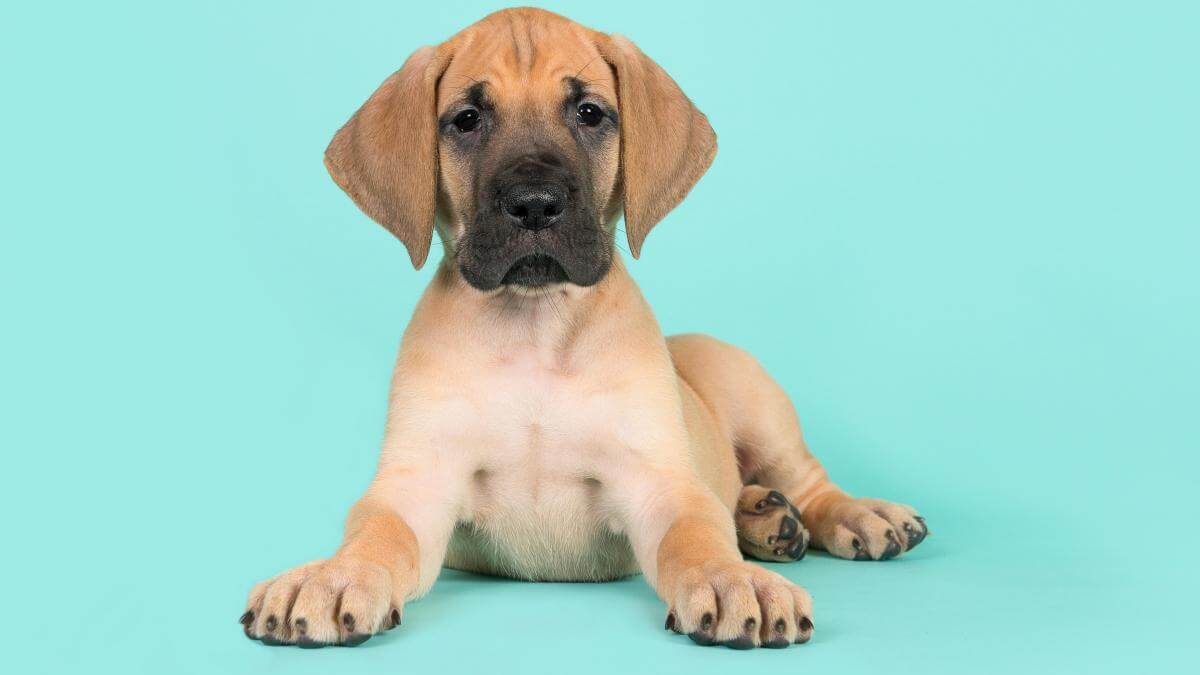
Health tested Great Danes are tested prior to breeding for:
Hip Dysplasia
Heart
Thyroid
Eyes
This helps to ensure that based on good genetics a healthy litter of Great Dane puppies is born.
What can you do?
All of these conditions can be prevented through regular exercise and maintaining a healthy weight with a balanced diet. You can prevent and/or alleviate joint disease and pain by including joint supplements and vitamins into their daily feedings. Joint supplements help to keep your dog's joints healthy and prevent arthritis.
A healthy diet for a Great Dane should consist of high-quality proteins, fats, carbohydrates, vitamins, and minerals.
Work with your vet to create a healthy diet plan that fulfills all your Great Dane's nutritional needs. Your Great Dane will thank you for it! We also have an article here to serve as a guide for feeding Great Dane puppies. READ OUR FEEDING GUIDE HERE
Thyroid Disease
The thyroid is a gland that produces hormones that regulate metabolism.
Great Danes are prone to problems with the thyroid gland, which can lead to weight gain, lethargy, and other health issues.
What does thyroid disease look like in a Great Dane?
If your Great Dane has an issue with weight gain, lethargy, hair loss, and heat and cold intolerance you can bring him to your vet for a simple blood test.
If it is revealed that your Great Dane has unfavorable thyroid levels, you can easily treat your dog with medication prescribed by your vet. The medication will control your dog's thyroid levels by balancing the excess hormones.
The disease itself is NOT life-threatening.
Bloat
Great Danes are also susceptible to bloat, which is a condition that causes your dog's stomach to fill with gas and twist, cutting off the blood supply to the stomach and other vital organs.
This can be a life-threatening condition and requires immediate medical attention.
Signs of bloat include restlessness, pacing, drooling, and trying to vomit without success. If your dog displays any of these symptoms, it is important to take them to the vet immediately.
What can you do?
There are a few things that you can do to help prevent bloat in your Great Dane, such as feeding smaller meals throughout the day and avoiding strenuous activity immediately after eating.
You can also purchase a raised feeder which is a special stand that elevates your dogs bowls several inches off the ground, preventing your dog from swallowing air while eating.
Keep stress to a minimum to help prevent bloat. Dogs that stress easily are more prone to bloat.
If you suspect that your Great Dane is suffering from bloat, don't hesitate to call your vet and head to the emergency animal hospital immediately. Time is of the essence when it comes to bloat.

Dilated Cardiomyopathy
Dilated Cardiomyopathy is a heart disease that is common in Great Danes. Also known as DCM, this disease affects the muscle of the heart, making it difficult for the heart to pump blood.
It causes the chambers of the heart muscle to thin and stretch, which can lead to heart failure and death.
What are the signs of cardiomyopathy?
The first sign of DCM is an irregular heartbeat. The heartbeat will sound more like a "swishing" versus a "lub dub" beat. Dogs with cardiomyopathy may have a decreased appetite, weight loss, coughing, difficulty breathing, and exercise intolerance. If your Great Dane displays any of these symptoms it is important to take them to your vet for an exam.
What can be done?
There is no cure for cardiomyopathy, but there are ways to manage the condition and make your Great Dane more comfortable.
Medications for DCM include angiotensin-converting enzyme inhibitors, beta-blockers, and diuretics. These medications can help to control the symptoms of DCM and improve your dog's quality of life.
40% of DCM cases are hereditary. So while there is no sure-fire way to prevent the disease the best thing you can do is to have your dog's heart checked regularly by a veterinarian.
*You should feed your Great Dane a high-quality diet that includes grains. There is a direct connection between grain-free diets and DCM. Studies have shown that grain-free diets are one reason why Great Danes suffer from DCM
Wobblers syndrome
Wobblers syndrome is a condition that affects the spine and nervous system.
This can cause weakness in the hind legs and difficulty walking.
Symptoms of wobblers syndrome include unsteadiness, incoordination, and weakness in the hind legs. If your Great Dane displays any of these symptoms it is important to take them to your vet for an exam.
What can be done?
There is no cure for wobblers syndrome, but there are ways to manage the condition and make your Great Dane more comfortable.
Holistic approaches to wobblers syndrome management include acupuncture, physical therapy, and massage.
You can also make some changes to your dog's environment to help them cope with the condition. For example, adding ramps or stairs to help them get around, or using a doggy wheelchair.
Surgical options are also available for wobblers syndrome, but they are usually only recommended as a last resort. The procedures are not always successful but can help to relieve some of the pressure on the spine and improve your Great Danes quality of life.
Strict weight management, exercise restriction, physical therapy, and surgery are all options for managing wobblers syndrome.
Cancer
Great Dane's are known to be very susceptible to cancer. Cancer is the leading cause of death in Great Danes, accounting for nearly 30% of all deaths.
The most common types of cancer seen in Great Danes is osteosarcoma which is the most common type of bone cancer.
Symptoms of osteosarcoma include lameness, pain, hard lumps on the limbs, and swelling. If your Great Dane displays any of these symptoms it is important to take them to your vet for an exam.
What can be done?
There is no cure for Osteosarcoma, but there are ways to manage the condition and make your Great Dane more comfortable.
These include surgery, radiation therapy, and chemotherapy.
There is a canine Osteosarcoma vaccine clinical trial in the works. The vaccine is designed to help the body build up immunity to osteosarcoma cells.
This clinical trial is still in the early stages, but it shows promise for the future of osteosarcoma treatment.
Can you prevent your Great Dane from getting cancer?
No. Unfortunately, there is no sure way to prevent your Great Dane from getting cancer. The best thing that you can do is to take them to the vet for regular check-ups and to be aware of the symptoms of cancer.
Providing your Great Dane with a healthy lifestyle and diet is the best way to help prevent cancer.

Do Female Great Danes live longer than male Great Danes?
There is no definitive answer to this question as each dog is different and will have different lifespans. However, smaller studies have shown that female Great Danes do tend to live slightly longer than male Great Danes. There is no scientific reason behind this, and the studies are not in-depth.

Large dogs relation to life span : Do all giant breeds have giant health issues?
The world's tallest dog in the Guinness World Records is Zeus, a Great Dane who measured 44 inches from paw to shoulder. Another gentle giant "George" held the Guinness World Record as world's tallest dog from 2010 to 2012 until he was unseated Zeus. Like most Great Danes, George had a rather short life and died just a month shy of his eighth birthday. [source Guinness World Records]
The Great Dane is not the only giant breed dog with a relatively short life span. There are other giant breed dogs that suffer from the same health problems. The Great Dane life span is comparable to other dogs.
What about other dogs?
Other large dog breeds: The shortest living dog breeds list includes the some of larger dogs. Due to their size, they are more likely to develop health problems hence a shorter life span. The Irish Wolfhound, which is similar in size to the Great Dane, has an average life span of just six to eight years. Other huge dogs like the Mastiff and the Neapolitan Mastiff have an average lifespan of just seven to eight years and are also similar in size to the Great Dane. The Scottish Deerhound has an average lifespan of seven years.
Smaller dogs such as the Toy Poodle and the Chihuahua, both have an average life expectancy of 14 years. Such dogs age more slowly and have a longer life expectancy.
Conclusion: In this article, we've discussed the reasons why Great Danes die early related to disease and other disorders. There is no single factor that leads to the short Great Dane lifespan. Experts consider the growth rate of a Great Dane is a lot faster compared to other breed's pups therefore they age quicker but I do not feel that this holds any value.
Many dog owners are not aware of the potential hereditary health problems their Great Dane may face. The major health risks are a big contributing factor to the short life span of a Great Dane.
The American Kennel Club recommends that you ask to see breeding history and a look into your dogs pedigree and health testing of the parents. This way you will know what health problems your Great Dane may be predisposed to.
A great dane lifespan is shorter than most dogs, but with proper care, they can enjoy a good quality of life.
The average lifespan of a Great Dane is one of the most important factors to consider when bringing this gentle giant into your life. While their time with us is often shorter than other breeds, typically ranging between 7 to 10 years, their love, loyalty, and presence leave an unforgettable impact. By providing proper care, regular veterinary check-ups, and a balanced diet, you can ensure your Great Dane lives their happiest and healthiest life within this time frame.
Understanding the average lifespan of a Great Dane allows owners to plan for their unique needs, from exercise and nutrition to preventive health care. While their years may be fewer, the joy and companionship they offer are immeasurable. Cherishing each moment with your Great Dane and prioritizing their well-being will ensure that their time as part of your family is filled with love and unforgettable memories. The average lifespan of a Great Dane may seem short, but the bond they create lasts a lifetime.
By being informed, you can take steps to prevent or treat these conditions and help your Great Dane live a long and healthy life. Educating yourself about the average lifespan of a Great Dane helps you better prepare for their needs and maximize the quality of their time with you
- Visit your vet regularly to check on your dog's health.
- Look for a breeder who has their dogs tested for hip dysplasia, heart disease, and thyroid disorders.
- Ask to see those health test results! Be an educated dog owner. Your dog's life is counting on your knowledge
Do you have a Great Dane? Be sure to check out our Great Dane blog linked HERE