Great Dane Growth and Weight Chart - Everything You Need to Know About Your Growing Great Dane
Known for being the “Apollo of Dogs,” the Great Dane is a giant dog breed with a gentle nature. Despite their name, Great Danes are not actually Danish. German nobles originally bred them for boar hunting. They are well known for their gentleness and patience with children as well as their fierce protectiveness. Scroll down to see our Great Dane growth chart ⬇️
If you’re the lucky pet parent of a Great Dane, you may be wondering how large can a Great Dane grow and how do I know when they are finished growing?
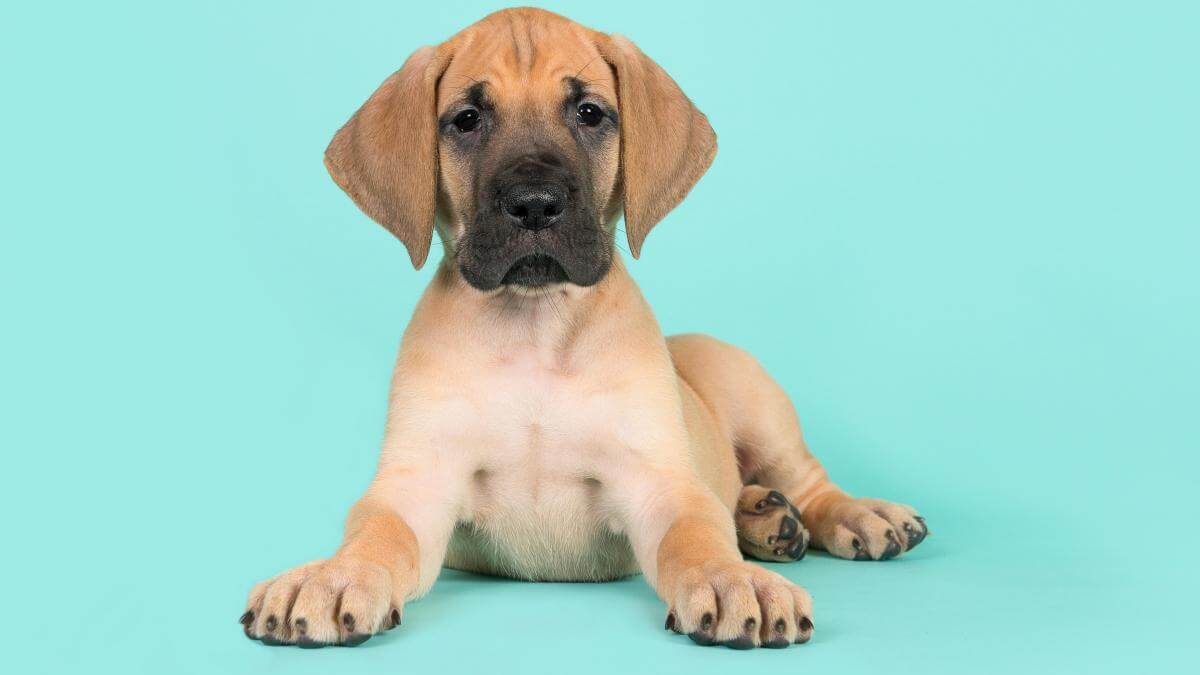
Everything you need to know about Great Dane growth: Great Dane Growth & Weight Chart
The following numbers are estimates of how much your Great Dane may weigh and how tall they might be at certain ages. If your Great Dane puppy is ahead or behind these numbers, do not worry! All dogs are different and will grow at different rates.
 Great Dane Growth Chart
*Please note that the above height and weight numbers are all approximate, not the golden rule. The height is always measured from the ground to shoulders while the dog is standing.

At what age is a Great Dane full grown?
Great Danes grow quickly, with their largest growth spurts occurring around four to six months of age. Per the Great Dane Club of America, Great Danes grow as much in one year as a human will grow in their first fourteen years!
Great Danes are considered fully grown between 18 and 24 months of age. Most Great Danes will reach their full height by 18 months and continue adding muscle during their second year.
How big should a 6-month-old Great Dane be?
Most Great Danes will weigh between 60 and 85 pounds and stand around 24 to 28 inches tall at six months old.

Remember that these numbers are averages and every puppy is unique and will grow at a slightly different rate.
Why is it vital that you monitor your Great Dane puppy’s growth?
When a Great Dane puppy grows too quickly, they are prone to developmental skeletal and joint disorders. Typically:
Panosteitis or
HOD (hypertrophic osteodystrophy)
These disorders are most commonly seen when a Great Dane puppy has an imbalance of the minerals in their diet and/or they are consuming too many calories. Great Dane experts recommend feeding your Great Dane a large-breed specific food to slow down their growth speed. Eating a large-breed growth dog food does not affect their final size and it just reduces the overall stress on a Great Dane puppy’s body while they grow. Preventive measures like feeding your Great Dane puppy a large-breed growth dog food are essential to prevent or decrease the severity of bone and joint issues. Perhaps you've noticed your great danes puppies legs look like they are "bowing"?
How much bigger will my Great Dane get?
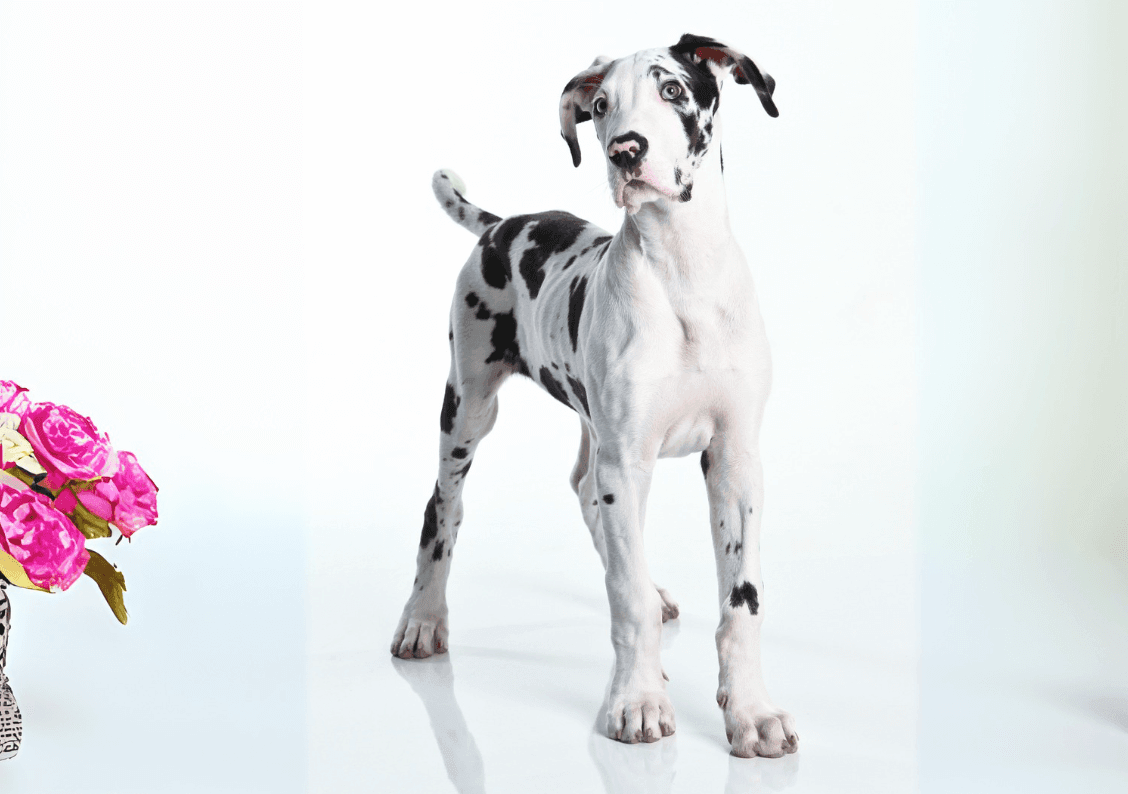
Great Danes typically reach their full height by 18 months old but will take at least two years to fill out completely. If your Great Dane puppy is less than two years old, they are likely still putting on muscle to reach their full adult size. If you purchased your Great Dane through a breeder, contact them for a more precise height and weight estimate based on your Great Dane’s parents and previous litters. Your breeder should be able to give you a more exact estimate of your Great Dane’s full size since puppies rarely grow larger than their parents. Alternatively, you can take a look at your Great Dane’s paws and compare them to their legs and body. Do your Great Dane’s paws look oversized? This is a classic puppy feature indicating that they still have some growing to do.
What is the size of a full-grown Great Dane?
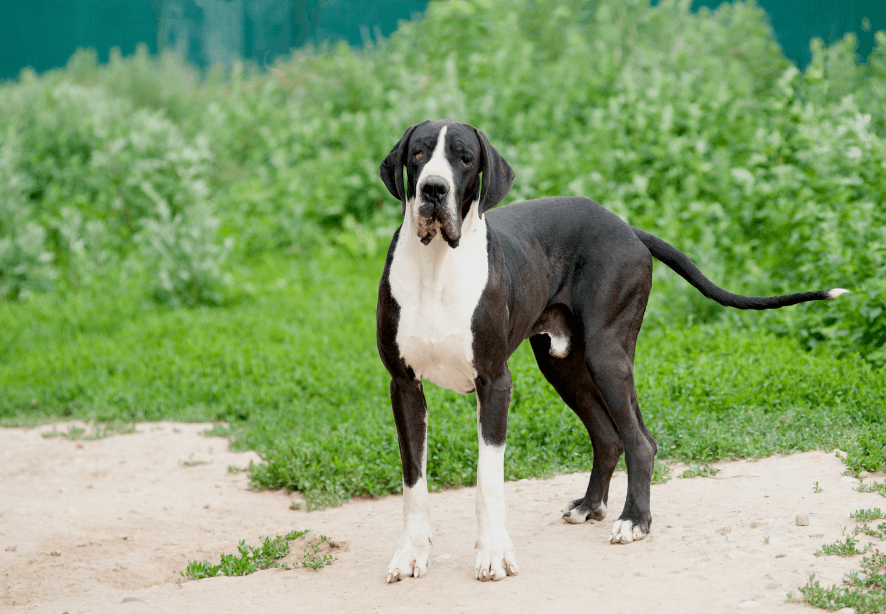
Per the American Kennel Club: Official Great Dane Standards a male Great Dane will be 30 to 32 inches tall and 140 to 175 pounds and a female Great Dane will stand around 28 to 30 inches tall and weigh 110 to 140 pounds
How do I make sure my Great Dane is healthy?
Prevention is an essential part of keeping your Great Dane healthy and strong. Purebred dog breeds, like Great Danes, are at a heightened risk of genetic health problems. Great Danes are particularly prone to joint issues, hip dysplasia, hypothyroidism, and bloat. The American Kennel Club lists canine bloat otherwise known as Gastric Dilatation Volvulus, which occurs when the stomach swells and twists, as the number one killer of the Great Dane breed. Although the cause of canine bloat isn’t always predictable, it’s widely agreed upon by experts that using a raised feeder, feeding small meals a day, ensuring your pup doesn’t eat too quickly, and avoiding heavy playtime or exercise within 1 hour before and after meals can decrease the risk of canine bloat.
If you are concerned about your Great Dane puppy getting bloat, talk to your veterinarian about preventative surgical procedures available, or what early symptoms of bloat look like so that you can watch for them in your pup.
Final words: Consult with your breeder or veterinarian about the best large-breed growth food options and other preventive health measures for your Great Dane pup. Continue taking your Great Dane to their veterinarian for regular checkups and to discuss any concerns you may have about your Great Dane’s growth or health.